I have installed more robot mowers than I have owned, which I think is the right way around. Fifteen years of building and renovating lawns around the Twin Cities taught me that the mower is the easy part and the layout is the hard part, and nothing has changed now that the machines are smart. So when a client asks me to compare wire-free robot lawn mowers, I do not open the spec sheet first. I open the yard. Where is the maple, where does the dog run, where does the snow pile sit until April, and where does the grass grow four inches in the week you are out of town.
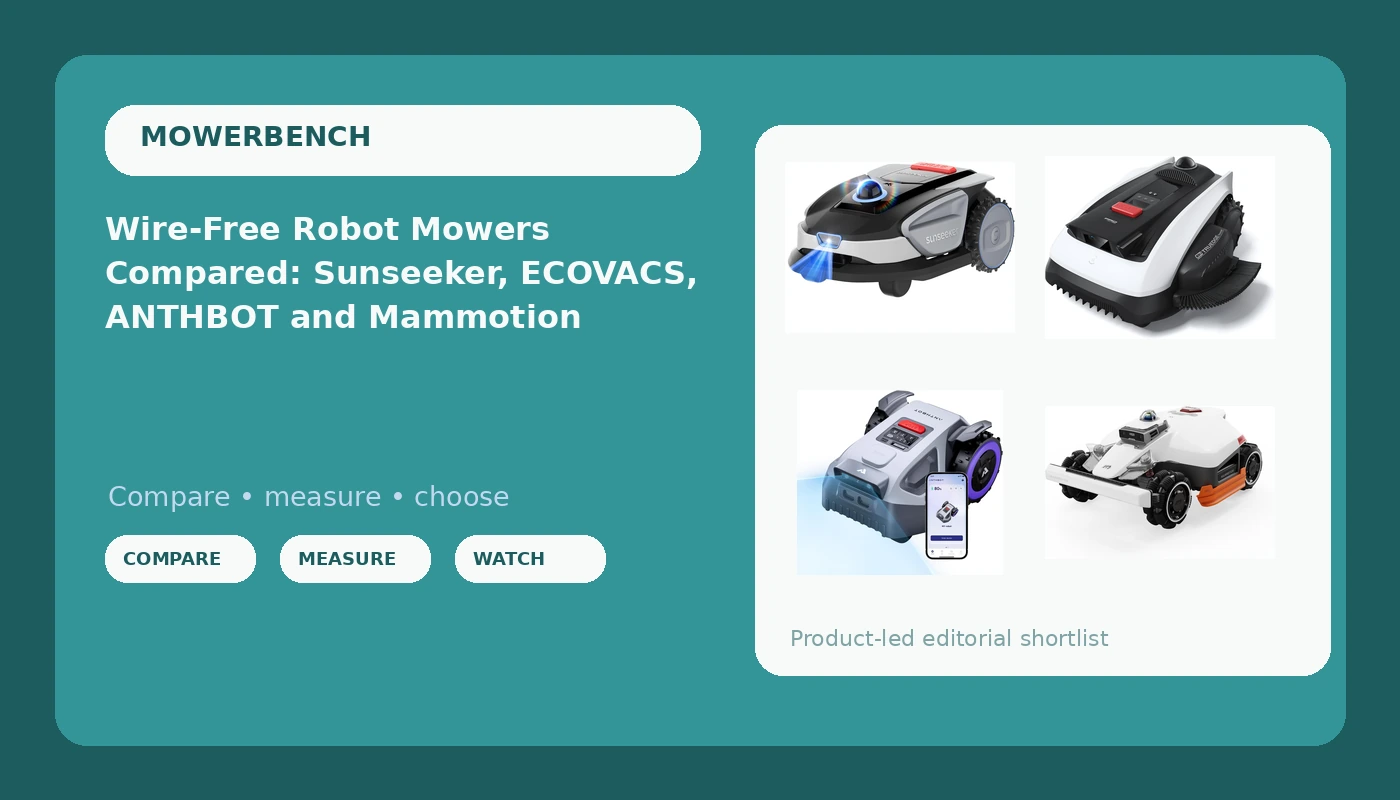
This comparison covers four machines that all skip perimeter wire and all sit in the current generation of LiDAR, camera and satellite navigation: the Sunseeker S4, the ECOVACS Goat O1000 LiDAR PRO, the ANTHBOT M5, and the Mammotion LUBA 3 AWD 3000H. I have not run all four side by side on the same lawn, so treat this as an install planning comparison rather than a shootout. What I can tell you is how each one's approach plays out in a real yard, because I have spent a decade watching these systems fail in specific and predictable ways.
Related: Robot Mower Slope Ratings Explained
The short answer: on a standard quarter-acre suburban lot, the ECOVACS Goat O1000 LiDAR PRO and the Sunseeker S4 are the two to weigh against each other, and I would give the edge to the ECOVACS for the edge mowing behavior it advertises. The Mammotion LUBA 3 AWD 3000H is the right machine if your lawn is genuinely large, genuinely steep, or both. The ANTHBOT M5 is the small-lot pick at the lowest cost of the four.
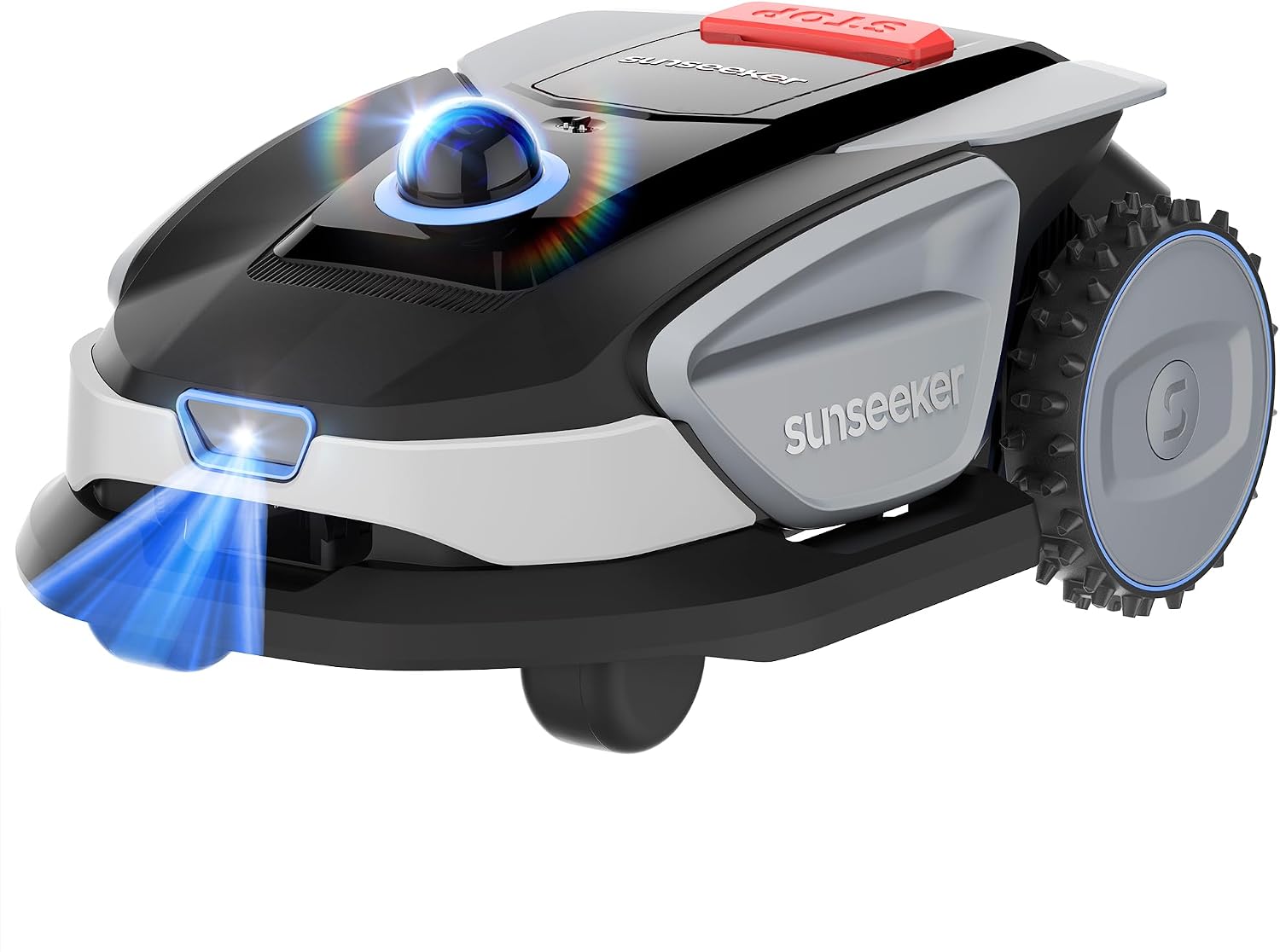
Sunseeker S4
3D LiDAR plus Vision AI in a wire-free package rated to a quarter acre, which is exactly the size of a standard suburban lot
No RTK layer, so heavy canopy is a question mark, and edge behavior is not called out the way it is on the ECOVACS
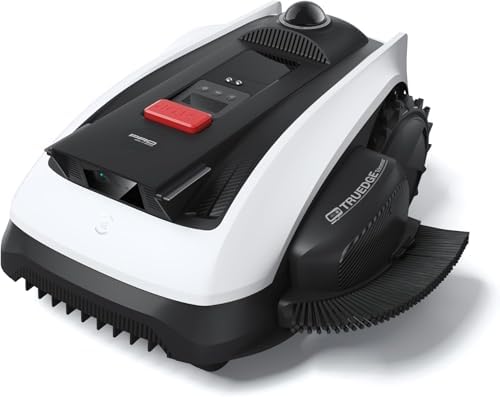
ECOVACS Goat O1000 LiDAR PRO
LiDAR mapping without perimeter wire, AI obstacle avoidance, and smart edge mowing named as a feature, which is what a fenced yard actually needs
Also capped at a quarter acre, and LiDAR-first mapping still wants a clean, consistent boundary to work against
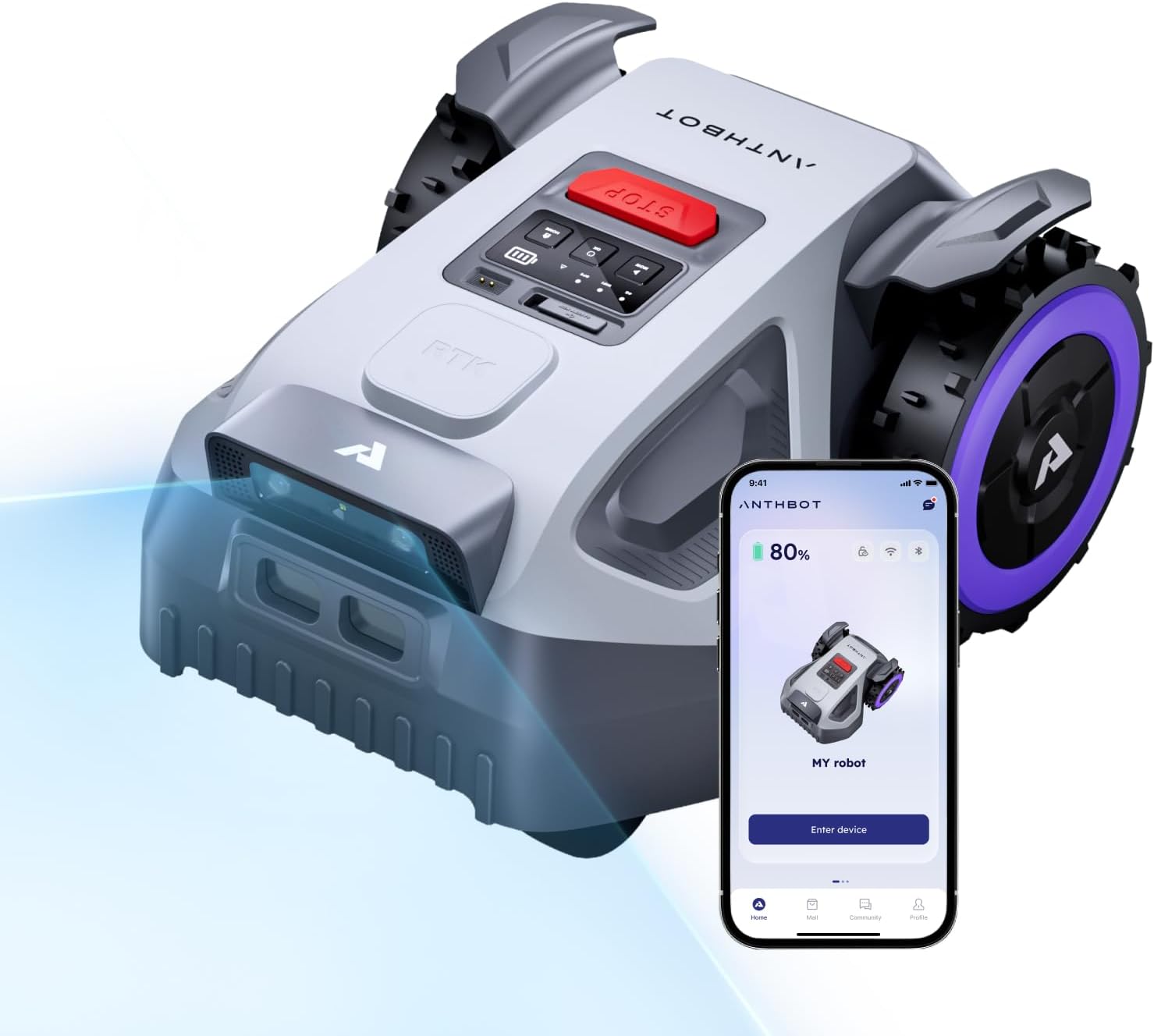
ANTHBOT M5
Lowest cost of the four, dual vision plus full-band RTK, multi-zone mapping, and a 45% slope claim that is unusually high for the small-lot class
The 1/8 acre capacity is the smallest here, so it is a small-yard machine only
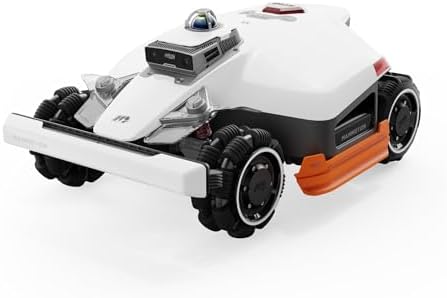
Mammotion LUBA 3 AWD 3000H
0.75 acre capacity, all-wheel drive, 360 degree LiDAR with NetRTK and AI vision, 30 zones, and a 2.2 to 4.0 inch cutting range
Most expensive of the four, and a mower this capable is wasted on a quarter-acre lot
Prices and availability were captured from Amazon Creators API and may change.
Prices move constantly on this category, so use the Check current Amazon price links in the table rather than trusting a number you saw last month.
What wire-free actually buys you
Wire-free sounds like freedom. What it actually means is that the mower replaces a buried boundary wire with some combination of LiDAR, cameras, and satellite positioning. You still do an install. You still walk the boundary and teach the mower where the lawn ends. You just do it in an app instead of with a spade and 200 feet of copper.
That trade is genuinely good for some yards and genuinely bad for others. The buried wire is boring, it works in the rain, it works under a maple, and it works at night. It also corrodes at every splice, gets nicked by every edger, and has to be repaired by someone willing to hunt a break in a 400-foot loop. I have done that job. It is not fun.
Wire-free removes that failure mode and adds a new one: the mower has to see where it is. Which brings us to the thing that actually separates these four machines.
Navigation: LiDAR, RTK, and the maple tree problem
There are two philosophies in this group, and the split tells you almost everything.
The Sunseeker S4 and the ECOVACS Goat O1000 LiDAR PRO both lean on LiDAR as the primary navigation sense, with the Sunseeker pairing 3D LiDAR with Vision AI and the ECOVACS pairing LiDAR mapping with AI obstacle avoidance. LiDAR builds a map by bouncing light off physical objects. That means it cares about geometry, not sky. A fence, a hedge, a raised bed, and the side of your house all show up as walls the mower can map against. It also means accuracy depends on a clean, consistent boundary.
The ANTHBOT M5 and the Mammotion LUBA 3 AWD 3000H add satellite positioning to the mix. The ANTHBOT runs dual vision plus full-band RTK. The LUBA 3 runs a tri-fusion stack of 360 degree LiDAR, NetRTK, and AI vision. RTK gives the mower centimeter-level absolute position by comparing signals from a fixed base station, and it is elegant when it works. It is also the technology that has burned the most of my clients, because RTK needs a clear view of the sky. Under a mature maple, along the north side of a two-story house, in a narrow side yard between a fence and a garage, the correction signal degrades and the mower starts drifting. I have watched a machine that was rated for a precise boundary line cut a wandering diagonal across a lawn because the sky was blocked.
That is why the hybrid approach on the LUBA 3 is the more interesting engineering. LiDAR and vision do the close work, RTK handles the long straight runs, and when the sky disappears the local sensors keep the mower honest. The ANTHBOT has the same idea in a simpler package, dual vision plus RTK, and for a small lot with more open sky that combination is probably enough.
If your lawn has heavy canopy, and mine does, a LiDAR-first machine is the safer bet. If your lawn is open and you want the mower to hold a straight line across a long run, RTK is a real advantage. This is not a brand preference. It is a site condition.
Lawn size headroom, and why the rating is a ceiling
The four ratings in this group are 1/8 acre, 1/4 acre, 1/4 acre, and 0.75 acre. Those are not targets. They are ceilings, and they assume a simple lawn with no complex zones and no long detours around obstacles.
Here is how I read them. The ANTHBOT M5 at 1/8 acre is a front-yard machine or a townhouse lot. Put it on a quarter acre and it will spend its whole day commuting. The Sunseeker S4 and the ECOVACS Goat O1000 LiDAR PRO are both rated to a quarter acre, which is the size of a standard suburban lot, and that rating is honest for both. The Mammotion LUBA 3 AWD 3000H at 0.75 acre is in a different class entirely, and that is the point of it.
The mistake I see most often is buying to the exact rating. If your lawn measures a quarter acre, a quarter-acre mower has no margin for the trampoline, the sandbox, the shed, and the garden beds that all sit inside that quarter acre. I would rather see a homeowner buy one tier of headroom than buy exactly to the number. On a quarter-acre lot that argues for looking hard at the LUBA 3 if the budget allows, or accepting that the Sunseeker and the ECOVACS will run longer days and need more babysitting during the spring flush.
Slope ratings versus a wet Minnesota hill
The ANTHBOT M5 claims 45%. The Mammotion LUBA 3 AWD 3000H claims 80%, with all-wheel drive to back it up. The Sunseeker S4 and the ECOVACS Goat O1000 LiDAR PRO do not lead with a slope number in the specs I have.
I want to be blunt about what a slope rating is. It is a number produced on a surface that is dry, uniform, and usually not real grass. I have watched a mower with a healthy slope rating slide sideways on wet fescue at a fraction of its claim, and I have watched a mower with all-wheel drive walk up a hill that a two-wheel-drive unit would not touch. Traction is the whole story, and traction on a hill is about tire contact, weight distribution, and whether the grass is wet.
That makes the all-wheel-drive LUBA 3 the only one in this group I would trust on a real hill in a real spring. The ANTHBOT's 45% claim is aggressive for its class, and dual vision plus RTK does not change the physics of two driven wheels. If your lawn has a slope that makes you nervous when you mow it with a walk-behind, buy for traction first and ignore the percentage.
Worth saying too: a mower that handles a slope on the way up still has to handle it on the way down, and it has to do it with a full clipping load and a wet deck. That is where most slope claims quietly die.
Zones, docks, and the two a.m. return trip
Multi-zone mapping is one of those features that sounds like a luxury until you have a front lawn, a back lawn, and a strip along the driveway. The ANTHBOT M5 advertises multi-zone mapping. The Mammotion LUBA 3 AWD 3000H advertises 30 zones, which is more than any residential lot needs and exactly the kind of headroom that makes complex properties easy. The Sunseeker S4 and the ECOVACS Goat O1000 LiDAR PRO both work from app-managed maps with obstacle avoidance, and ECOVACS specifically calls out smart edge mowing, which is the feature I care about most on a fenced property.
Edge behavior is where wire-free mowers live or die in my opinion. A mower that leaves four inches uncut along every fence line has not mowed your lawn, it has mowed the middle of your lawn. Perimeter wire handles edges by default because the wire is the edge. Wire-free systems have to be taught to hug the boundary, and the quality of that hugging varies enormously.
And then there is the dock. Every one of these machines has to find its charging station, in the dark, in the rain, with a low battery and a full clipping load, and it has to do it without parking in your flowerbed. I have seen more installs fail at the dock than anywhere else. Ask how the mower navigates home when the map is imperfect, because that is the failure you will actually experience.
Cutting height, blades, and the running cost nobody quotes
The Mammotion LUBA 3 AWD 3000H lists a cutting height range of 2.2 to 4.0 inches. That range matters more than people think. In Minnesota I want to run tall in July, three and a half to four inches, because tall grass shades its own roots and survives a dry stretch. I want to drop lower in the fall for the final cut. A mower that tops out below four inches is a mower that cannot do the summer strategy, and that is a genuine argument for the LUBA 3 on a northern lawn.
Blade life is the hidden cost of every robot mower, and it is where the category quietly punishes people. Dull blades do not cut grass, they tear it, and torn grass tips brown off and invite disease. A robot running daily will go through blades far faster than a homeowner expects, and some models require a special tool to swap them, which is a design decision I will never understand. Before you buy any of these four, find out what a replacement blade costs and how it attaches. If the answer involves a proprietary wrench, budget for the frustration.
The app is a feature, not the mower
Every machine here is app controlled. That is table stakes now, and it is also the part of the product most likely to disappoint you. I have watched maps vanish after firmware updates, schedules drop silently, and mowers sit in the middle of the lawn at noon because a push notification was the only warning that something changed. The robot is hardware. The app is the thing you interact with every single day.
The Sunseeker S4 and the ECOVACS Goat O1000 LiDAR PRO come from brands with broader smart home ecosystems, which cuts both ways. The ANTHBOT M5 and the Mammotion LUBA 3 AWD 3000H come from companies that built their reputation in this specific category. I would read recent owner reports on the app for whichever one you are considering, and I would weight them heavily. A great mower with a broken app is a slow, expensive robot vacuum with a blade.
Which one I would install where
For a flat, open, quarter-acre suburban lot with a fence and a dog, the ECOVACS Goat O1000 LiDAR PRO is the one I would spec first, with the Sunseeker S4 as the alternative if the ECOVACS app reports in your region are poor. Both map without wire and both fit the lot size. The ECOVACS gets the nod because it names edge mowing as a feature, and edge mowing is the difference between a lawn and a lawn with a mohawk around the fence.
For a small lot, a townhouse yard, or a front lawn only, the ANTHBOT M5 is the value pick of the group, and the full-band RTK plus dual vision stack is more navigation technology than most 1/8-acre lots need. Just respect the capacity limit. A small mower on a big lawn does not fail dramatically, it just never finishes.
For a genuinely large property, a steep property, or a property with both, the Mammotion LUBA 3 AWD 3000H is the only one here built for the job. All-wheel drive, 0.75 acre, 30 zones, and a tri-fusion positioning stack. It costs the most of the four and it is the one I would put on my own 0.4-acre lot with the tricky slope, because headroom is cheaper than a second mower and a rescue call.
Bottom line
Wire-free is not magic and it is not maintenance free. It is a different set of failure modes, and the right pick comes down to three things: how big your lawn really is, how much sky your lawn has, and whether your slope is a gentle grade or a hill. Match those three to the navigation approach and the capacity rating, and you will end up with a machine that earns its dock. Get them wrong and you will spend the summer rescuing a robot from the hostas.