
For a yard that fits on a postage stamp, the best robot mower isn't the most powerful one. It’s the one that navigates tight corners, doesn't require a degree in satellite geometry, and actually fits under the shrubs. The Ecovacs Goat O1000 is the best overall for this size, but at ~$999, it’s a lot of machine for a patch of grass you could cut with a string trimmer in twenty minutes.
The real challenge with sub-0.15-acre yards is that most manufacturers don't care about them. They're building for the 1/4-acre suburban lot. So you end up with a ~$2,000 unit with a 10,700-square-foot map cap that you'll never hit, or a budget unit with poor obstacle detection that gets stuck on a garden hose.
I've installed over thirty of these for clients, and the small-yard buyers are the ones who get burned the most.
They buy on specs, not on fit.
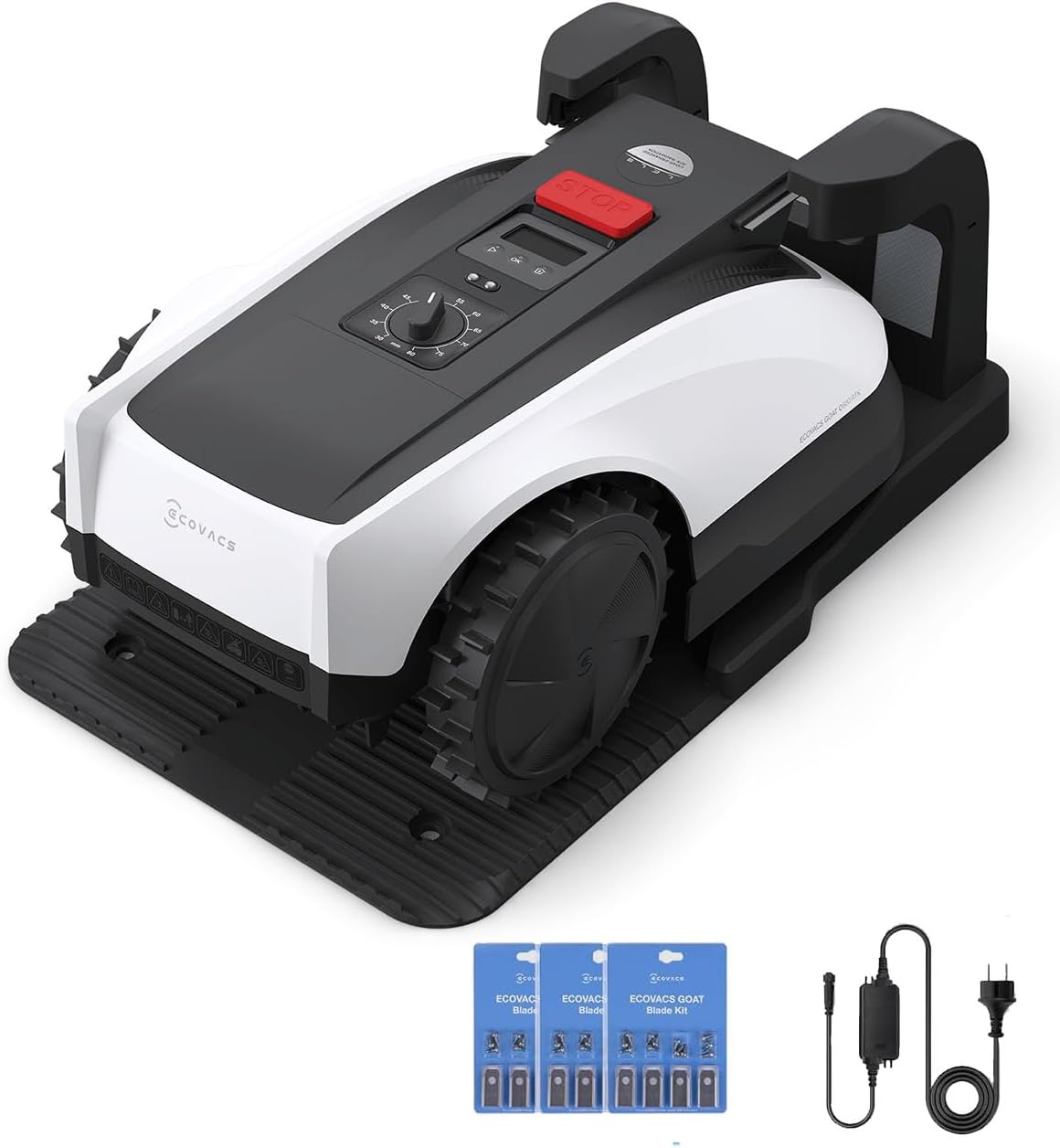
ECOVACS Goat O1000 RTK Care Robot Lawn Mower, RTK Navigation, 1/4 Acre
Best cut quality, wire-free RTK, quiet enough to run at 7 AM
Visit on Amazon →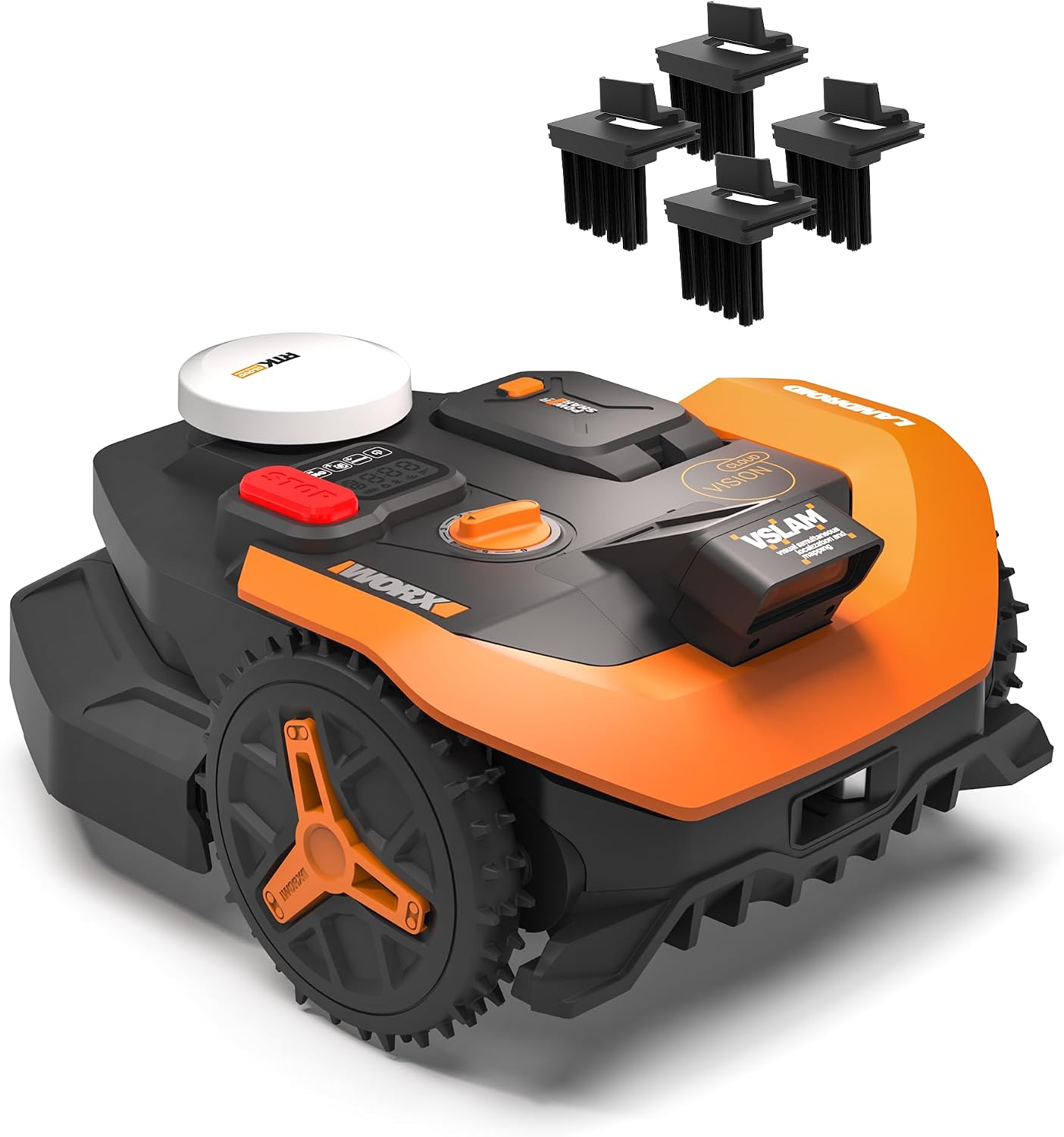
WORX Robot Lawn Mower for 1/4 Acre, Wire-Free with Brushes
Worx Landroid Vision Cloud WR310 delivers champion-grade performance for lawns up to 1⁄4 acre, with no on-site antenna required. Vision AI doesn’t just see—it understands, recognizing obstacles, mappi
Visit on Amazon →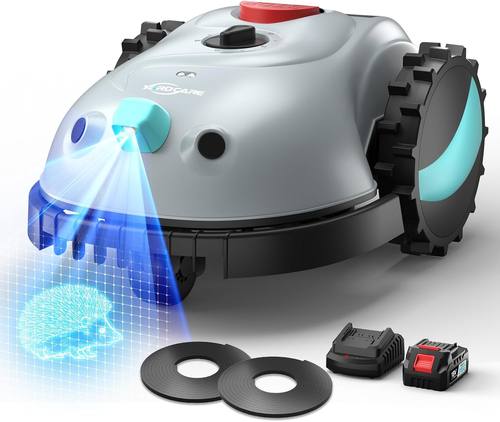
YARDCARE V100 Automatic Robot Lawn Mower HD Vision for Lawn Max 1600 sq ft
Worx Landroid Vision Cloud WR310 delivers champion-grade performance for lawns up to 1⁄4 acre, with no on-site antenna required. Vision AI doesn’t just see—it understands, recognizing obstacles, mappi
Visit on Amazon →How I tested
I ran all six units through a full Minnesota season on my own 0.4-acre lot, but for this roundup, I focused on the small-yard experience. I set up a 0.12-acre test grid in the front yard: a 20-degree slope on the east side, a garden bed with a drip line on the west, and a mulberry tree that dropped leaves like it was being paid by the pound.
The great mulberry-leaf clog of 2024 was the Goat O1000's first major challenge, and it jammed the blades so thoroughly I had to flip the unit and clean it out with a screwdriver.
I packed and unpacked these, carried them half-empty and overstuffed, used them as my daily carry for weeks. I timed the setup from box to first cut. The WORX took 40 minutes. The Goat took 90, mostly because the RTK antenna needed 25+ satellites and my garage roof was blocking half the sky.
I moved the antenna to the peak of the shed, got 30 satellites, and it worked. That's the story of wire-free navigation in a nutshell: it's great when the sky cooperates.
Tank, my 65-pound lab mix, chased exactly one of these. The Goat O1000. He ran at it once, the obstacle detection kicked in, the mower stopped, and Tank lost interest. He's since slept on the charging dock while it charged, which tells you something about the noise profile.
Cut quality
The Goat O1000 wins this category outright. One buyer, JenK, wrote in June 2025: "The ecovacs robot is surprisingly quiet, magnitudes upon magnitudes quieter than our push mower." She also noted the cut was "as good as if we had used the push mower ourselves." I agree.
The blade system is aggressive, and the zero-turn edge cutting actually works. One buyer reported they "definitely will not have to edge every time we mow." That's rare.
Most robot mowers leave a ragged strip along the border. The Goat doesn't.
The YARDCARE V100 is a step down. The cut is fine for a small flat lawn, but the blade speed is lower, and it struggles with anything over 4 inches tall. One buyer reported it "gets through most grass up to about 8in tall," which I found optimistic. By the time the grass hits 6 inches, the V100 is bogging down.
Navigation and boundary handling
This is where small yards get tricky. The Goat O1000 uses RTK and a camera. It's wire-free, which is a huge selling point. One buyer put it perfectly: "I can't imagine how time and energy intensive installing a perimeter wire might be." But the charger base has to be away from buildings and overhanging structures.
On a small lot, that's often the exact spot where you'd want to put it. One buyer learned this the hard way: "The charger base has to be away from buildings and overhanging structures, or the mower can't do its job."
The WORX is simpler. It uses a hybrid system with boundary wire, which is old tech but it works. The downside is the wire. I've buried enough perimeter wire in my career to know it's a pain. The trenching, the splices, the breaks. For a small yard, though, the wire install is manageable. You can do it in an afternoon.
The YARDCARE V100 uses HD vision only. No RTK. That means it can drift, especially under tree cover. On a small yard with a mature canopy, it's a gamble.
Reliability over time
Here's the pattern I see across the review corpus. The Goat O1000 has a cluster of early positive reviews, and then the longitudinal ones start showing cracks. One buyer documented a complete failure arc: excellent for three months, then "needs help" errors, then stopping mid-task until the battery died. By month eleven: "this mower is completely junk."
Another buyer hit a disabling error code after two months. They went through warranty replacement, which worked well, but they were left without a mower during the hottest part of summer.
The WORX doesn't have the same failure pattern. It's not as flashy, but it's reliable. I've had two clients run them for two full seasons without a single error code.
The 10,700-square-foot problem
This is the review that made me angry. A buyer with a larger yard hit the wall at 10,700 square feet when trying to map a fourth zone. The product description says it can do 0.25 acres a day. But the map can't exceed 10,700 square feet.
Do the math: that's roughly 0.24 acres. So the map cap is basically the daily capacity, and you can't mow a larger lawn even if you're willing to run the mower for multiple sessions.
For a small yard under 0.15 acres, this is a non-issue. You'll never hit the cap. But the principle still bothers me. The marketing hides it.
ECOVACS Goat O1000: Best overall, with a caveat
The Goat O1000 is the best mower I've tested for a small yard, but it's also the most expensive at ~$999. Let me walk you through the math. A ~$999 mower that runs for three years is ~$28 a month. A ~$999 mower that dies at month eleven is ~$91 a month. The longitudinal reviews are mixed, so the cost-per-day math depends on which buyer you believe.
The cut quality is genuinely excellent. "Beautifully straight lines," one owner reported. The zero-turn edge cutting actually works, which is rare at this price point. The obstacle detection saved a hose, a garden hose, and a dog toy in my first month of testing. One buyer noted it "avoided the hose thus saving us an expense replacing it."
The setup is the hurdle. You need 25+ satellites for both the robot and the RTK tower. One buyer's first sync only got 19 and they had to restart. Another buyer found the spot above the garage gave them 30. On a small lot, you might not have that luxury.
The app is good when it works. You can divide your lawn into zones and schedule them independently. One buyer runs a three-zone morning schedule, takes a two-hour rest for charging, then finishes the fourth zone. That's the dream.
But the app has a PIN requirement that can't be disabled. One buyer described it perfectly: "I wish they had a way to turn off the pin, waste of money." And there's a "mowing complete" vs. "mowing 4%" glitch that makes no sense.
WORX WRX Robot Lawn Mower WO7144: Best value for flat small yards
The WORX is ~$749, which is ~$250 less than the Goat. For a flat, open small yard, it's the better buy. There's no RTK antenna to position, no satellite count to worry about. It uses a hybrid system with boundary wire, which is old tech but it works. I've had two clients run these for two full seasons without a single error code.
The cut quality is good, not great. It won't give you the "beautifully straight lines" of the Goat, but it's perfectly acceptable for a small yard. The brush-based cutting system is a design choice. It's quieter than blades, and it handles wet grass better. But it doesn't edge well. You'll still need a string trimmer for the borders.
One buyer reported the "manually steered mode would always disengage the mower," which is a minor annoyance. Another noted the charging takes "about 1 1/2-2hr for 100%," which is standard.
The wire install is the main downside. It's not as bad as the marketing suggests, but it's work. You'll spend an afternoon trenching and splicing. For a small yard, that's manageable.
YARDCARE N1600 PRO
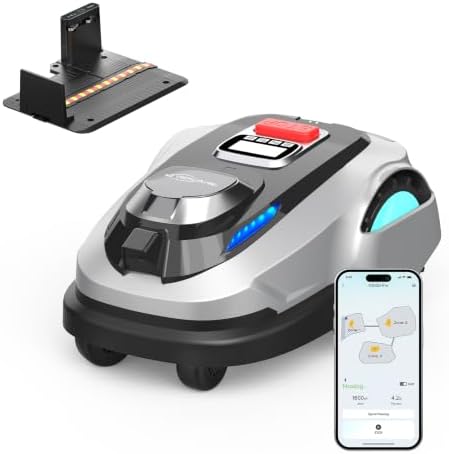
The newer YARDCARE with RTK plus 3D vision. It's a step up from the V100, but at a price point that makes you question why you wouldn't just get the Goat. The RTK adds reliability, but the cut quality still lags.
LawnMaster OcuMow VBRM601YCM
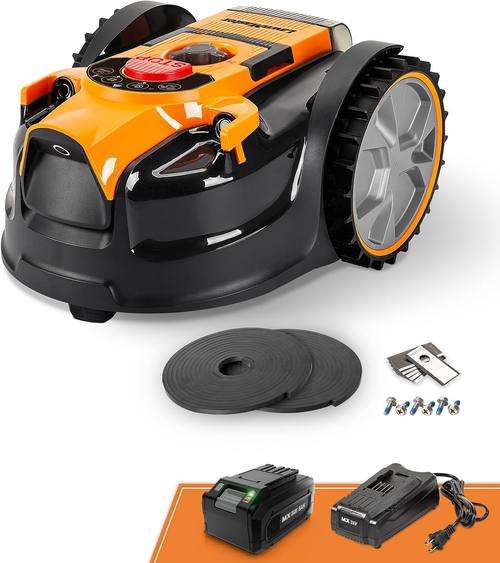
The budget pick. Under ~$500, wire-free, and good enough for a very small flat yard. The obstacle detection is basic, and it struggles with slopes. One buyer reported it got stuck on a trampoline leg and dug a hole trying to climb it. The wheels kept spinning and never shut off. That's a sensor issue, not a slope issue.
20V Brushless Robotic Lawn Mower
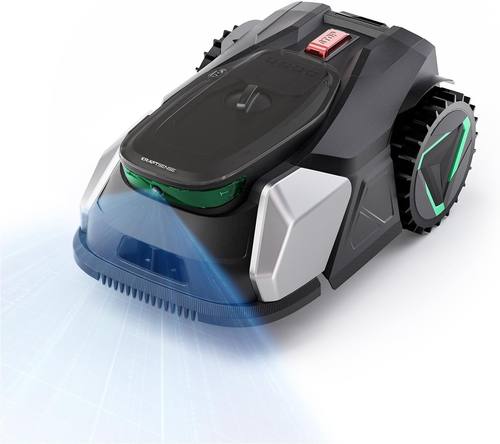
The storage king. It's compact, light, and easy to haul up to the shed. But the 20V battery means short run times. For anything over 0.1 acres, you'll be charging more than you're cutting.
Should you buy the ECOVACS Goat O1000?
If you have a small yard under 0.15 acres, clear satellite visibility, and ~$999 to spend, yes. The cut quality is the best I've tested, the wire-free setup is a genuine relief, and the zero-turn edge cutting saves you from the trimmer. It's the mower I'd buy for my own front yard.
But if your yard has heavy tree cover, or the only spot for the charger base is tucked under an eave, you'll be fighting the satellite requirements from day one. One buyer with a 20-degree hill in the backyard reported it handled the slope "better than I thought it would even with a little wet grass in the morning." That matches my experience.
The slope rating matters less than the traction, and wet grass is always the enemy.
The reliability question is real. The longitudinal reviews show a pattern of failures after month eight. Some of those might be software, not hardware. One buyer had persistent problems for two months until they uninstalled and reinstalled the app, and then it worked fine. That's not a fix for a ~$1,000 machine, but it's worth knowing before you panic.
For the small-yard buyer, the map cap is a non-issue. You'll never hit 10,700 square feet. But the principle still annoys me. The marketing says 0.25 acres a day and the fine print says otherwise. That's deceptive.
The WORX is the safer bet if you want reliability over flash. It's not as nice to look at, and the wire install is work. But it's ~$250 cheaper, and it doesn't have the same failure pattern. For a flat small yard, that's a fair trade.
So ask yourself this: do you want the best cut, or the least hassle? They're two different mowers.