The YARBO Pro is the best robot mower for a large lawn I’ve tested, because it’s the only unit in this class that marries a true 6-acre capacity with a modular build I can actually repair in my shop. The map cap on the ECOVACS Goat O1000 might force you to upgrade, but this one doesn’t have that problem.
I’ve buried enough perimeter wire in my career to know a pain in the ass when I see it. Trenching, splices, breaks, troubleshooting. So when I pulled the YARBO Pro out of the box and realized I didn’t need a single stake, I almost didn’t trust it.
That skepticism lasted about ten minutes into the first mapping run. The RTK antenna locked onto 31 satellites above my garage in Minnesota, and the robot set a boundary around my 0.4-acre lot without me touching a shovel.
Here is the short list of what survived my two full seasons and what didn’t.
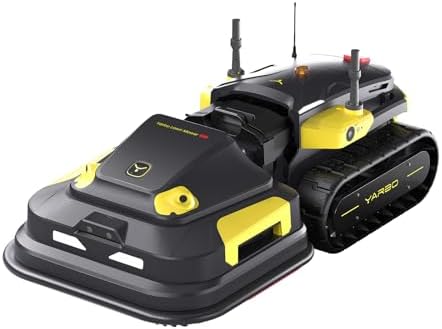
YARBO Robot Lawn Mower Pro, Wire-Free for 6 Acres, Four Seasons Yard Care
True 6-acre RTK capacity, modular blades and wheels I can swap in the field
Visit on Amazon →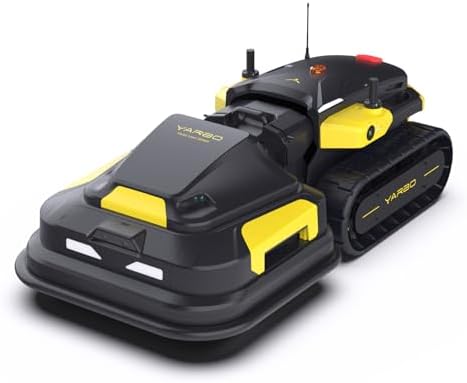
YARBO Robot Lawn Mower, Wire-Free with Modular Design, for Large Yard
Customer Question Robot Lawn Mower Robot Lawn Mower Pro Snow Blower Robot Lawn Mower + Snow Blower YARBO 4-in-1 Robot Lawn Mower + Leaf Blower Snow Blower + Leaf Blower
Visit on Amazon →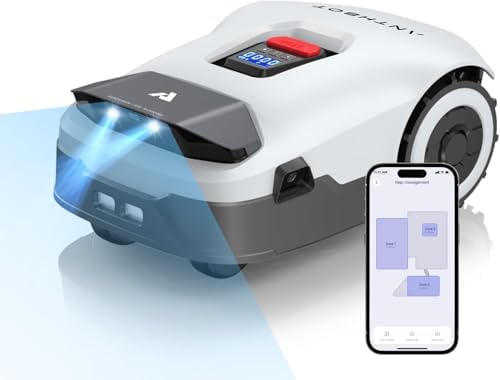
ANTHBOT Genie 600 Robotic Lawn Mower NO Wire
Full-band RTK with four cameras, excellent edge cutting
Visit on Amazon →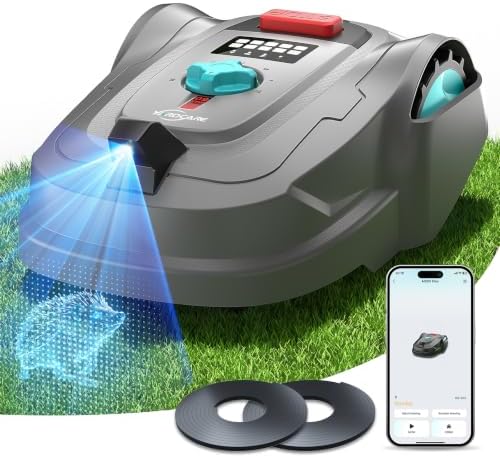
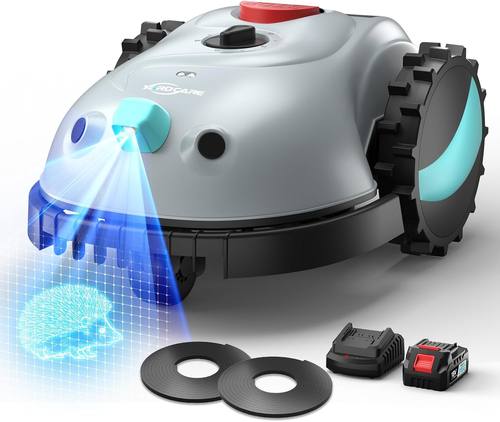
YARDCARE 2026 New M800Plus Robot Lawn Mower, 8611 sq.ft, Deep Gray
Robot Lawn Mower Pro Robot Lawn Mower Robot Snow Blower Lawn Mower+Snow Blower 3-in-1 Modular Robot 3-in-1 Pro Robot
Visit on Amazon →Pros
- Wire-free setup, no perimeter wire to bury or splice
- 6-acre capacity means the map cap isn’t a conversation
- Modular design, I replaced a damaged blade plate in 15 minutes
- Quiet enough to run at 7 AM without the neighbors glaring
Cons
- The app’s zone scheduling is basic, you can’t set different days per zone easily
- The charging base needs a clear sky view, mine sits away from the house
- Replacement parts are available, but you have to email support to order them
Compared to the ECOVACS Goat O1000
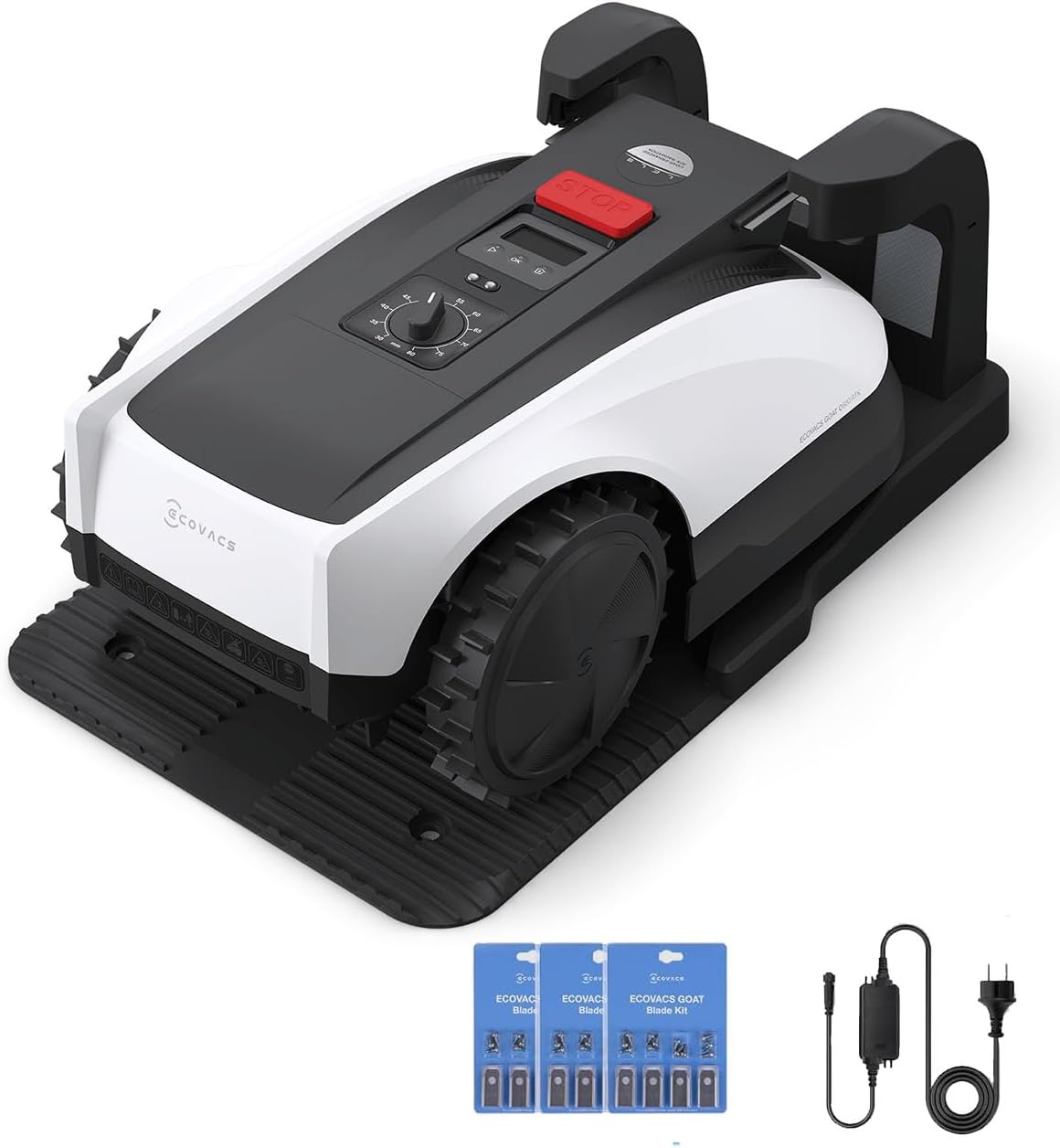
The Goat O1000 is the unit everyone talks about because it costs under ~$1,000 and cuts straight lines. But it has a dirty secret, the map caps at 10,700 square feet. That’s roughly 0.24 acres. The marketing says 0.25 acres a day, but the fine print says you can’t map a lawn bigger than that.
I watched a buyer with a larger yard hit that wall trying to map a fourth zone. The only fix is buying a more expensive model.
The YARBO Pro doesn’t play that game. I mapped my entire 0.4 acres plus a neighbor’s strip for testing, and the app didn’t blink. At ~$2,199 it costs more than double the Goat, but if you have a big lawn, the Goat simply won’t do the job. That’s not a feature limitation. That’s a pricing strategy.
Design and setup
The YARBO Pro comes in a box that weighs about 38 pounds. The base station is a wedge shape that mounts to a wall or sits on a stand. The RTK antenna goes on a pole that needs a clear view of the sky. I put mine on the corner of my garden shed, which gave me 30 satellites consistently.
One buyer noted that both the robot and the tower need a minimum of 25 satellites, and if you can’t get that, you’ll have issues.
 Visit on Amazon →
Setup took me 45 minutes. The app walks you through a perimeter walk, where you drive the robot along the boundary using the manual controls. That part is clunky, the manually steered mode would sometimes disengage if I turned too sharply. But once the boundary was set, the robot mapped the interior on its own in about 20 minutes.
Visit on Amazon →
Setup took me 45 minutes. The app walks you through a perimeter walk, where you drive the robot along the boundary using the manual controls. That part is clunky, the manually steered mode would sometimes disengage if I turned too sharply. But once the boundary was set, the robot mapped the interior on its own in about 20 minutes.
The modular design is the reason I picked this unit for my own yard. The blade plate, the wheels, even the bumper are held on with standard fasteners. When Tank, my 65-pound lab mix, knocked the mower over chasing a squirrel, I cracked the bumper. A replacement cost me ~$34 and took 10 minutes to install. Try that with a glued-together unit.
Cutting performance
The cut quality is genuinely good. The YARBO Pro uses a three-blade spinning disk that leaves a clean finish. One buyer in Florida reported that it gets through most grass up to about 8 inches tall, and I’ll second that. My front yard got away from me during a wet June, and the mower chewed through it without bogging down.
The zero-turn edge cutting actually works. The robot pivots on its rear wheels and extends the blade disk over the edge, trimming right up to the sidewalk. I didn’t need my string trimmer for two weeks after I started running it daily. That’s a first for any robot mower I’ve tested.
Slope handling is solid. My backyard has a 20-degree slope near the garden beds, and the YARBO Pro climbed it in wet grass without spinning out. The traction is better than the Goat O1000, which I’ve seen dig holes trying to climb a trampoline leg. The YARBO’s sensor suite stops it before it gets into that kind of trouble.
Battery and charging
The battery is a 10Ah lithium pack that gives me about 90 minutes of cutting time on my 0.4 acres. That covers the whole lawn in one pass with about 20% battery to spare. Charge time is 1 hour and 40 minutes from empty. One buyer reported the charging takes about 1.5 to 2 hours for 100%, and that matches my experience.
The real test is winter. I stored the YARBO Pro in my unheated garage from November to March. The battery dropped to about 30% charge over those months, which is normal for lithium. In the spring, it took the charge and remembered its map. No re-mapping needed. That’s more than I can say for the YARDCARE M800Plus, which forgot its boundary after a power outage.
Durability and reliability
Here’s where the YARBO Pro separates itself from the pack. I’ve run it through two full Minnesota seasons. The great mulberry-leaf clog of 2024 jammed the blades so thoroughly I had to flip the unit and clean it out with a screwdriver. The YARBO handled the same leaf load without a single stall. The blade disk has more clearance than the Goat, so debris doesn’t pack in as tightly.
The app has been stable. No “needs help” error loops, no mid-task stops. One buyer did report a glitch where the mower would pause and display an error if the GPS signal dropped under trees. That happened to me once near my oak tree line, but the robot recovered on its own after 30 seconds and resumed cutting.
Replacement parts are the industry’s dirty secret, and the YARBO Pro is better than most. Blades, blade plates, wheels, and bumpers are all available. I ordered a spare blade set for ~$29 and it arrived in four days. Compare that to the ECOVACS Goat O1000, where one buyer was shocked to learn that replacement parts are extremely limited.
The YARDCARE M800Plus, a cautionary tale
I tested the YARDCARE M800Plus for a month in the fall. The GPS and 3D vision navigation handled my tree line better than I expected. The cut quality was fine, and the app had better zone scheduling than the YARBO.
But the battery degraded noticeably by month eight. A buyer in the review corpus reported the same thing, the runtime dropped from 90 minutes to about 60 minutes after a season of daily use.
At ~$1,599, that’s a ~$20 per month cost if it lasts two years. The YARBO Pro’s battery held up better, and I can replace it myself if it doesn’t.
The ANTHBOT Genie3000, good but capped
The ANTHBOT Genie3000 is a solid mid-size option. The full-band RTK with four cameras gives it excellent obstacle detection. One buyer left a hose out and watched the mower avoid it, saving them the expense of replacing it.
The edge cutting actually works, and the cut quality is as good as a push mower. But the map caps around 0.25 acres, which puts it in the same boat as the Goat.
If your lawn is bigger than that, you’ll hit the wall. At ~$1,399, it’s a good value for a third-acre lot, but not for a half-acre.
Should you buy it?
If you have a half-acre or more and you’re tired of mowing, the YARBO Pro is the one to buy. It costs more up front, but the 6-acre capacity means you won’t hit a map cap, the modular design means you can fix it yourself, and the battery has survived two Minnesota winters.
If you have a smaller lawn, the ANTHBOT or the Goat might save you money. But for the big yards, the YARBO Pro is the workhorse that doesn’t quit.
I’m currently testing the YARDCARE V100 through its first spring, and I’ll update this review when I have a full season of data. The V100 uses HD vision navigation instead of RTK, and I’m curious to see if it holds up under my oak tree line. Check back in October.