Nobody buys a robot mower because they love mowing. They buy one because a quarter acre of grass wins the argument every Saturday. The good news is that affordable robotic lawn mowers have finally crossed from novelty into genuinely useful, and the current crop is wire-free, which matters more than any line on a spec sheet. I have installed enough of these machines for landscaping clients around Minneapolis to know that the setup, not the marketing, decides whether a mower earns its keep. Trenching a boundary loop around a city lot is the step most homeowners quit on, so every model below skips the wire. What follows is a working short list, what each machine is actually built for, and the places where a cheaper mower will start to feel cheap.
Related: Robot Mower Installation: Wire Layout and Dock Placement
Quick answer
The Segway Navimow i105N is the strongest fit for most small and mid-size yards because it is rated for 1/8 acre without a perimeter wire and pairs RTK positioning with vision and AI-assisted mapping. Choose the LawnMaster OcuMow instead when your lawn sits between 1,000 and 2,000 square feet and you want the simplest optical navigation setup at the lowest entry point.
Affordable robotic lawn mowers worth comparing
This is the short list of the best affordable robotic lawn mowers in the wire-free segment right now. Coverage ratings differ widely between these six, so read the square footage on each card against your own lawn before you read anything else.
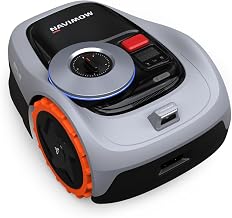
Segway Navimow i105N Robot Lawn Mower Perimeter Wire Free 1/8 Acre RTK+Vision Robotic Lawnmower, AI-Assisted Mapping, Virtual Boundary, APP Control, 58dB(A) Quiet, Multi-Zone Management
Covers up to 1/8 acre without a perimeter wire, using RTK positioning together with vision and AI-assisted mapping. Virtual boundary, multi-zone management, app control, and a 58 dB(A) noise rating.
Visit on Amazon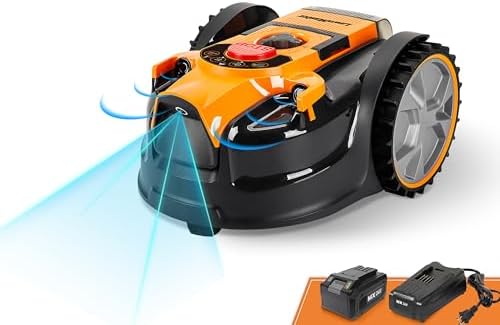
LawnMaster OcuMow Perimeter Wire Free Robot Lawn Mower Cuts Small Lawns 1000-2000 Square Feet with Optical Navigation, Obstacle Avoidance, Low Noise and No Go Functiont
Optical navigation for lawns of 1,000 to 2,000 square feet, with obstacle avoidance, a no-go function, and low-noise operation. Wire-free setup.
Visit on Amazon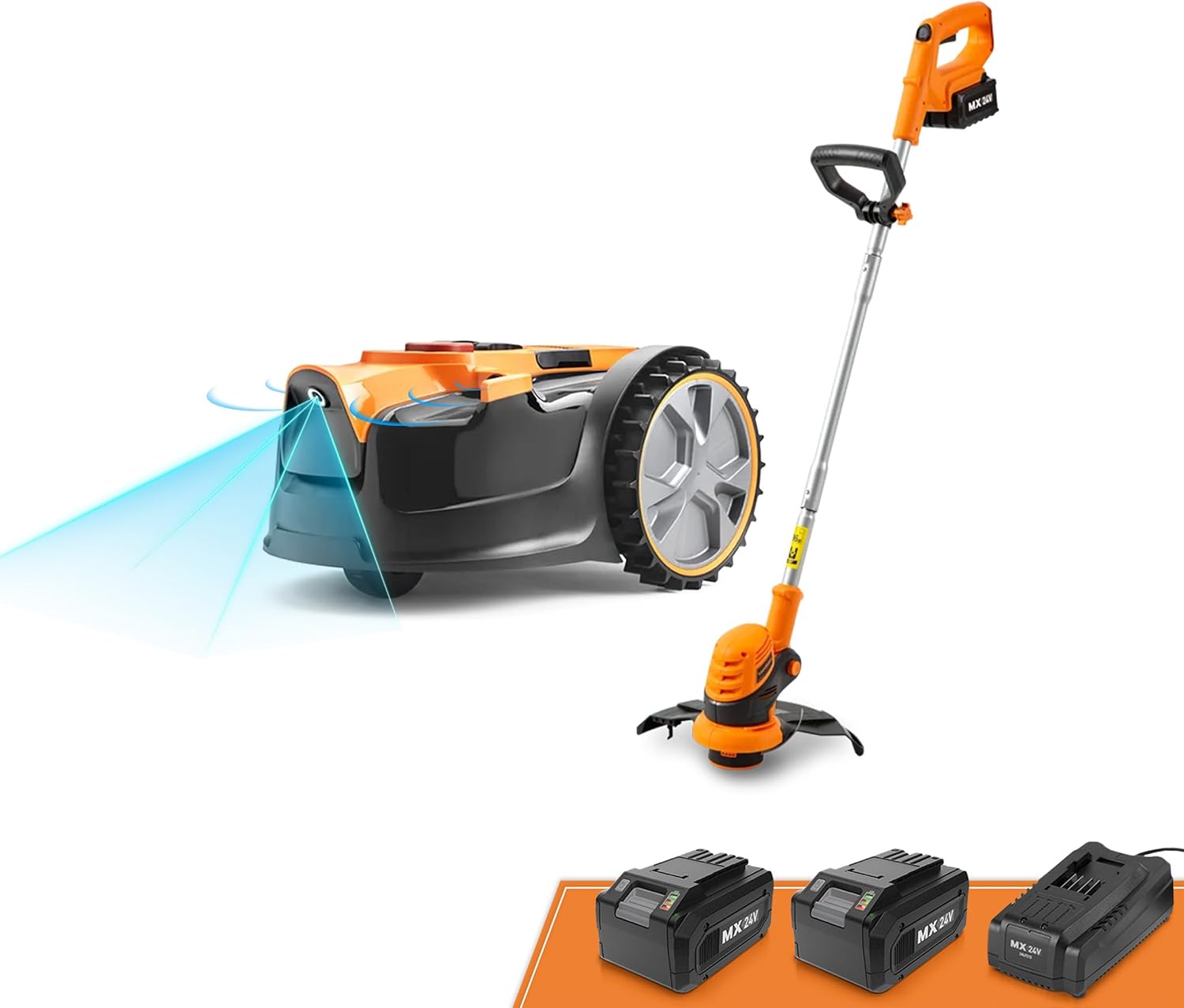
LawnMaster OcuMow Robot Lawn Mower with Cordless 24V MAX 10” Grass Trimmer Combo Kit Perimeter Wire Free for Small Yards 2000-4000 Square Feet Optical Navigation Automatic Obstacle Avoidance Spot Cut
OcuMow mower rated for 2,000 to 4,000 square feet, paired with a cordless 24V MAX 10 inch grass trimmer. Optical navigation, automatic obstacle avoidance, and spot cut.
Visit on Amazon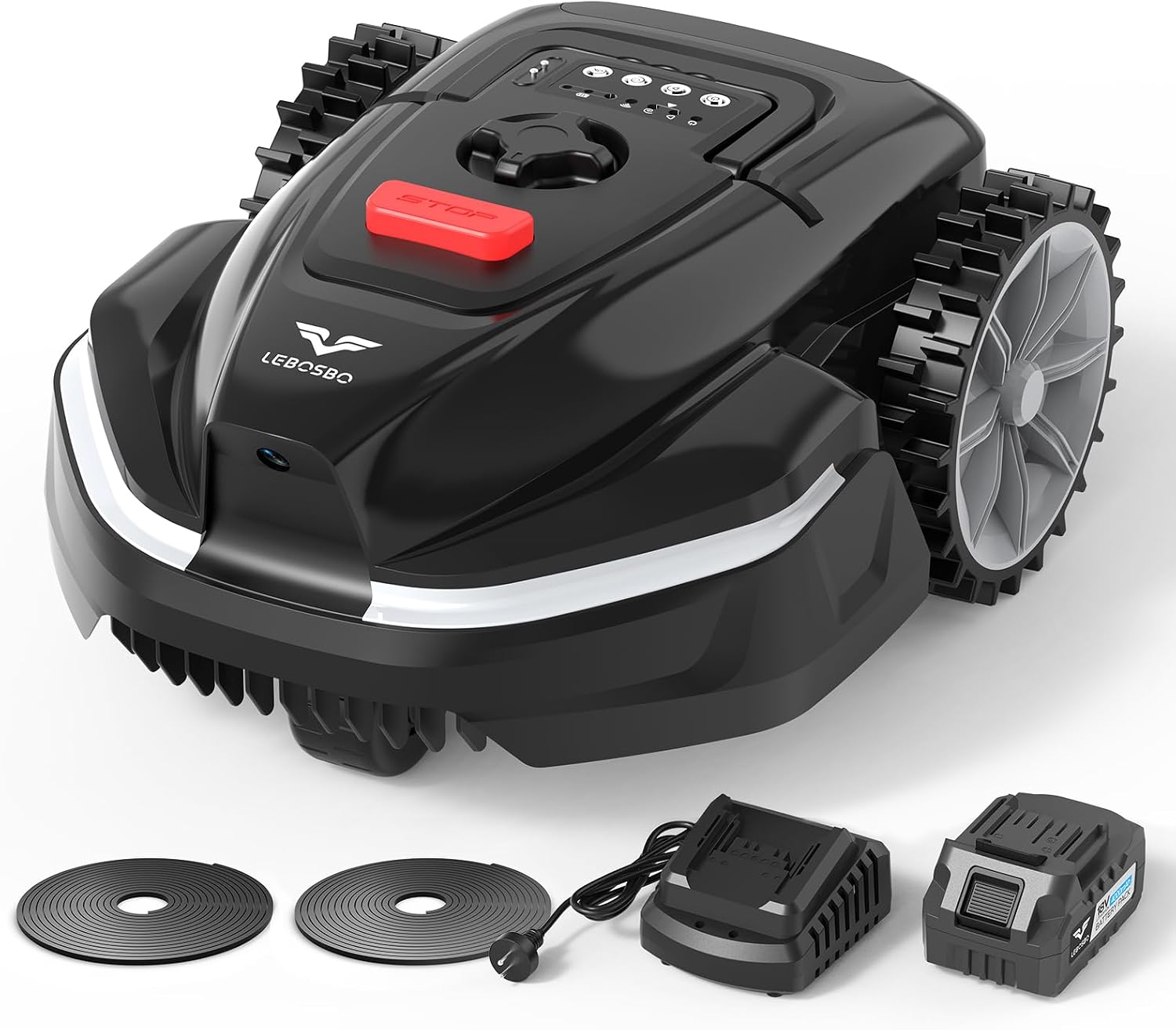
V3 AI Vision Robotic Lawn Mower, 1600 Sq.Ft, Black
A 1,600 square foot AI vision mower in black, positioned as the lowest-cost way into vision-based navigation.
Visit on Amazon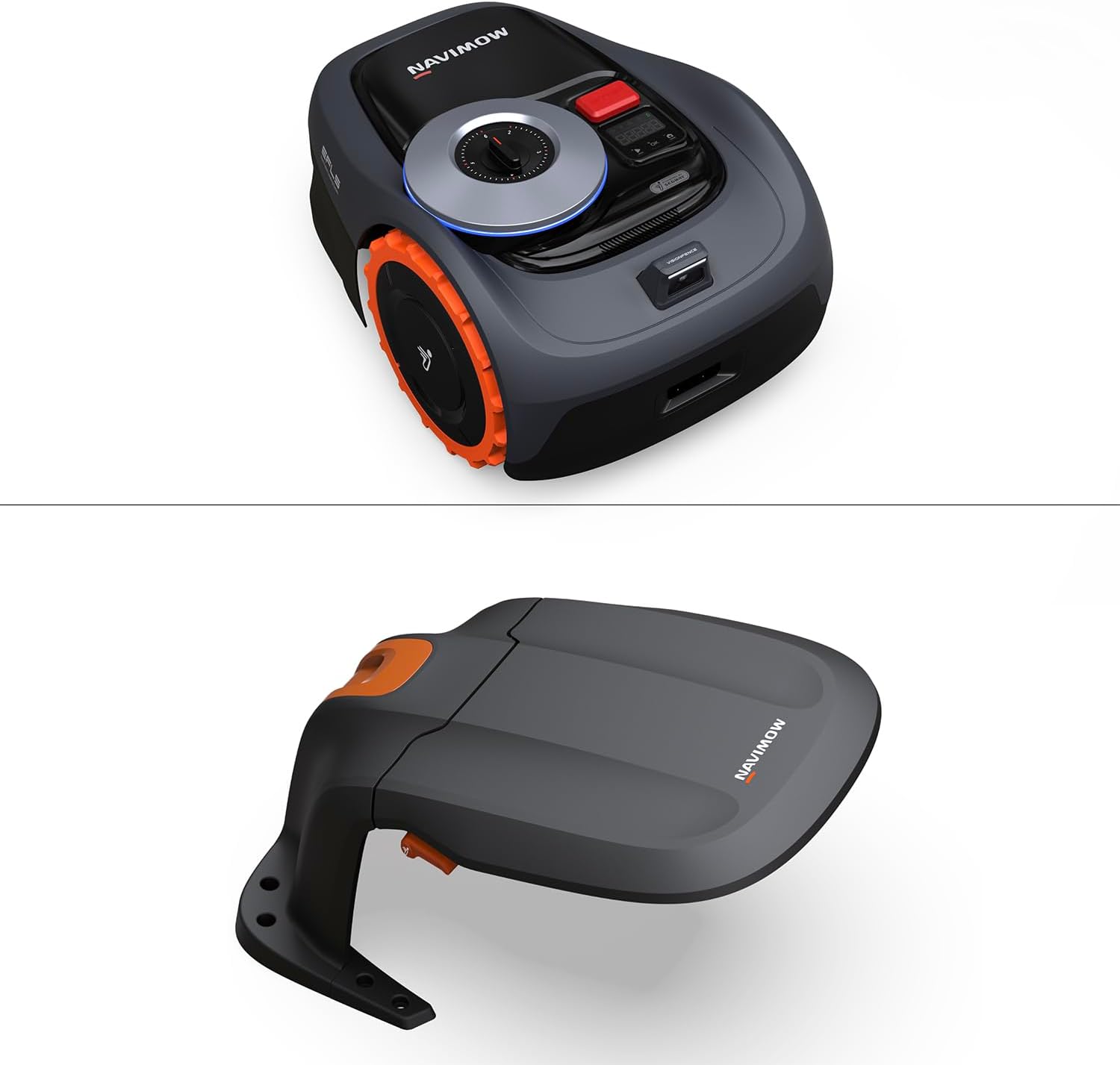
Navimow i110N + Garage S for i Series Robot Lawn Mower
The Navimow i110N bundled with the Garage S shelter for the i Series docking station.
Visit on Amazon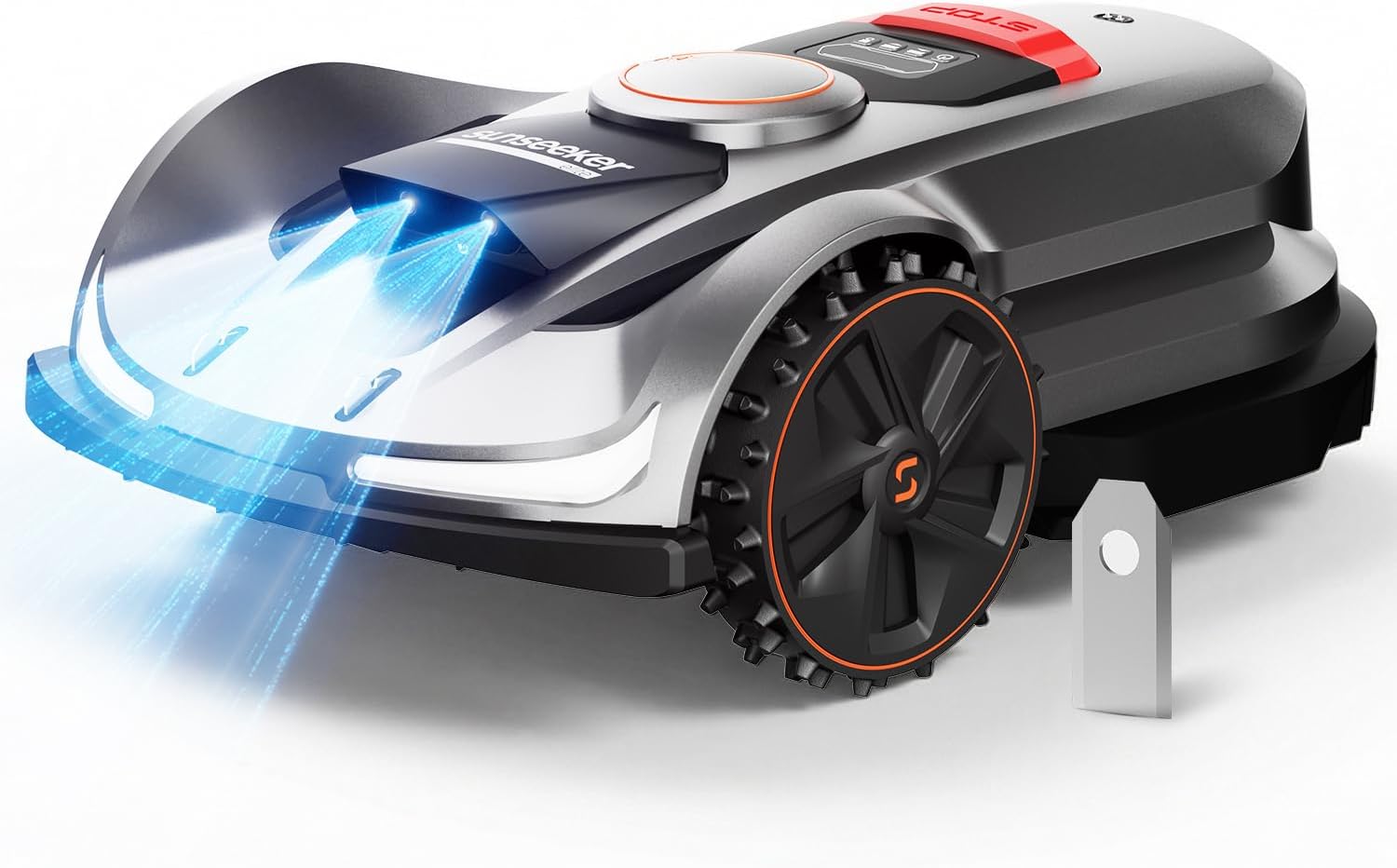
Sunseeker X7 AWD Robot Lawn Mower, RTK, Vision AI, 0.75 Acre, Wire-Free
Check current Amazon price
All-wheel drive, RTK plus Vision AI navigation, and coverage up to 0.75 acre, wire-free.
Visit on AmazonPrices and availability may change. Check the retailer for current details.
How these products were compared
Every model here was compared on five things: rated coverage area, navigation and boundary method, obstacle handling, docking and storage hardware, and app and scheduling control. Those five cover the questions that decide whether a robot mower works on a real lawn, and they are exactly the questions the spec sheets answer badly.
Coverage is the first filter. A mower rated for 1/8 acre is not a mower you want on a third of an acre, no matter how good the navigation is, because the machine will run all day and still fall behind in a wet spring. Navigation method is the second. RTK positioning holds a line beautifully under open sky and struggles under dense canopy, while optical navigation reads the lawn itself and needs decent light and contrast. Models that combine both are the pattern I expect this market to settle on.
Obstacle handling matters more than people expect. Dog toys, garden hoses, and the occasional forgotten trowel are the normal contents of a suburban lawn. Docking hardware is the fourth criterion, because a dock under a maple drip line or a snow line needs a shelter more than it needs a clever app. App and scheduling control comes last on the list but not least, since a mower you cannot reschedule easily ends up running when you want to be outside.
The product names, images, and retailer links in this guide are matched to the same verified listing, so every card points to the exact model described. Nothing here is presented as lab measurement. Where the published specifications are silent on a detail, this guide leaves it out rather than guessing, which is why you will not find invented runtimes or slope figures below.
How to choose the right robotic lawn mower
Measure first, and measure the grass, not the lot. Fence lines, garden beds, and the strip between the driveway and the sidewalk all count, but a mower also loses time to narrow passages and tight corners. Take the rated coverage and plan on using no more than about three quarters of it. A mower rated at 2,000 square feet is a comfortable fit for a 1,500 square foot lawn, while the same machine on a full 2,000 square feet will run constantly in May.
Then look up at your trees. RTK-only mowers need a clear view of the sky, and a mature maple will drop that signal in a way no firmware update fixes. If your lawn is ringed by canopy, favor a model with vision or optical navigation, or one that blends RTK with vision, and expect to spend time correcting the map in the first week. If your lawn is open and flat, RTK does a very clean job and you will notice it in the straightness of the cut.
Slope ratings are the number I trust least. A published percentage is usually measured on dry turf, and wet grass, a sidehill run, and a full deck of clippings all change the math. If your lawn has a slope that makes you lean when you walk it, plan on a model with all-wheel drive or accept that you will mow that strip yourself.
Decide how much you care about the dock. A garage or shelter accessory keeps debris and weather off the charging contacts, and it also stops the mower from parking in a puddle. If your yard floods at all, that matters more than any app feature. If you are still torn between positioning systems, my RTK versus perimeter wire comparison walks through the trade-offs in detail. The short version: wire is boring and reliable, RTK is elegant and site-dependent, and vision is the compromise that keeps improving.
Segway Navimow i105N robot mower
The Navimow i105N is the model I would point a neighbor toward first, and the reason is coverage rather than features. It is rated for 1/8 acre, which covers the typical suburban front and back lawn without asking the machine to run dawn to dusk. It is perimeter wire free, and it uses RTK positioning together with vision for AI-assisted mapping. That combination is the sensible middle path: the RTK side holds straight lines in the open, and the vision side helps when the sky view degrades under branches.
The rest of the feature list is what you want at this level. There is a virtual boundary instead of a buried wire, multi-zone management for yards split by a walkway or a bed, app control for scheduling, and a 58 dB(A) noise rating that means you can run it while the neighbors are still asleep.
The trade-off is the one every wire-free mower shares. Setup is a mapping exercise rather than a trenching job, but it still takes an afternoon of watching the machine learn your lawn, and the first map will need correction. Tree cover will slow it down. The 1/8 acre rating is a ceiling, not a suggestion, and a third of an acre with a dog in the yard needs a bigger machine. No shelter is included, so budget for one or build your own.
Alternatives to consider
The LawnMaster OcuMow is better suited to lawns of 1,000 to 2,000 square feet where the budget is tight and the yard is simple, since it navigates optically with obstacle avoidance and a no-go function rather than relying on RTK. The LawnMaster OcuMow trimmer combo is a stronger fit when your lawn runs 2,000 to 4,000 square feet and you want the edges handled in the same purchase, because it pairs the mower with a cordless 24V MAX 10 inch grass trimmer and adds spot cut.
The V3 AI Vision mower, the Navimow i110N with Garage S, and the Sunseeker X7 AWD cover the rest of the range. The V3 is the cheapest way into vision-based navigation at a 1,600 square foot rating, which makes it a reasonable first robot for a small city lot. The i110N bundle adds the Garage S shelter to the i Series platform, which is the upgrade to pick if the dock sits in an exposed spot or under a tree that drops sap. The Sunseeker X7 AWD is the outlier at 0.75 acre with all-wheel drive, RTK, and Vision AI, and it is the one to choose when the lawn is large and the slope is real.
Day-to-day use and maintenance
Robot mowing is a frequency game. A modest mower running every day keeps the lawn in better shape than an expensive one running twice a week, because short clippings break down fast and never smother the turf. Set the cutting height a notch higher than you think you need in spring, when the grass grows four inches overnight, then drop it once the flush passes.
Blades are the hidden cost. Dull blades tear grass instead of cutting it, and a torn tip browns at the edge. Check the blades every few weeks in heavy season, replace them when the cut looks ragged, and keep a spare set on hand so a dull blade does not become a two week pause. Pick a model whose blades you can swap without a special tool, because the ones that need one get ignored.
Clean the underside of the deck regularly. Wet clippings pack into the housing, and a packed deck drags, which shows up as a mower that suddenly cannot climb a slope it handled in May. Clear leaves off the dock and check the charging contacts. Walk the lawn before the first run of the day as well: dog waste, toys, and a garden hose are the three most common causes of a rescue mission, and the fall leaf drop will clog a deck faster than anything in summer.
Firmware updates and app changes deserve attention. After any major scheduling or mapping update, re-check the map and the schedule before you trust the mower to a full week. Winter storage means a clean machine, a battery stored per the manual, and a dock that is either covered or brought inside. None of that is difficult, but all of it is easy to skip.
Buying checklist
- Measure the actual grass area, including narrow side strips, and compare it to the rated coverage with room to spare.
- Choose the navigation method based on tree cover and lawn shape rather than the biggest number on the box.
- Confirm that the exact model includes the virtual boundary or no-go features you need, since bundles vary.
- Check whether a dock shelter is included, especially if the mower parks under trees or in a low spot.
- Read the blade replacement and cleaning instructions before buying.
- Verify the current retailer price, availability, and return terms before you commit.
Final recommendation
Choose the Segway Navimow i105N when the lawn is up to about 1/8 acre, the sky view is mostly open, and you want RTK plus vision without a perimeter wire. Choose the LawnMaster OcuMow when the lawn is 1,000 to 2,000 square feet and optical navigation at the lowest entry point is the priority. For anything larger, the Sunseeker X7 AWD is the one rated for the job, and the LawnMaster OcuMow trimmer combo covers the middle ground with the trimmer included.
Match the coverage rating to your grass, keep the blades sharp, and run it often. The best affordable robotic lawn mowers are the ones that keep running, not the ones with the longest feature list.